
Red-Bellied Woodpecker with Sculpted Lentinellys micheneri
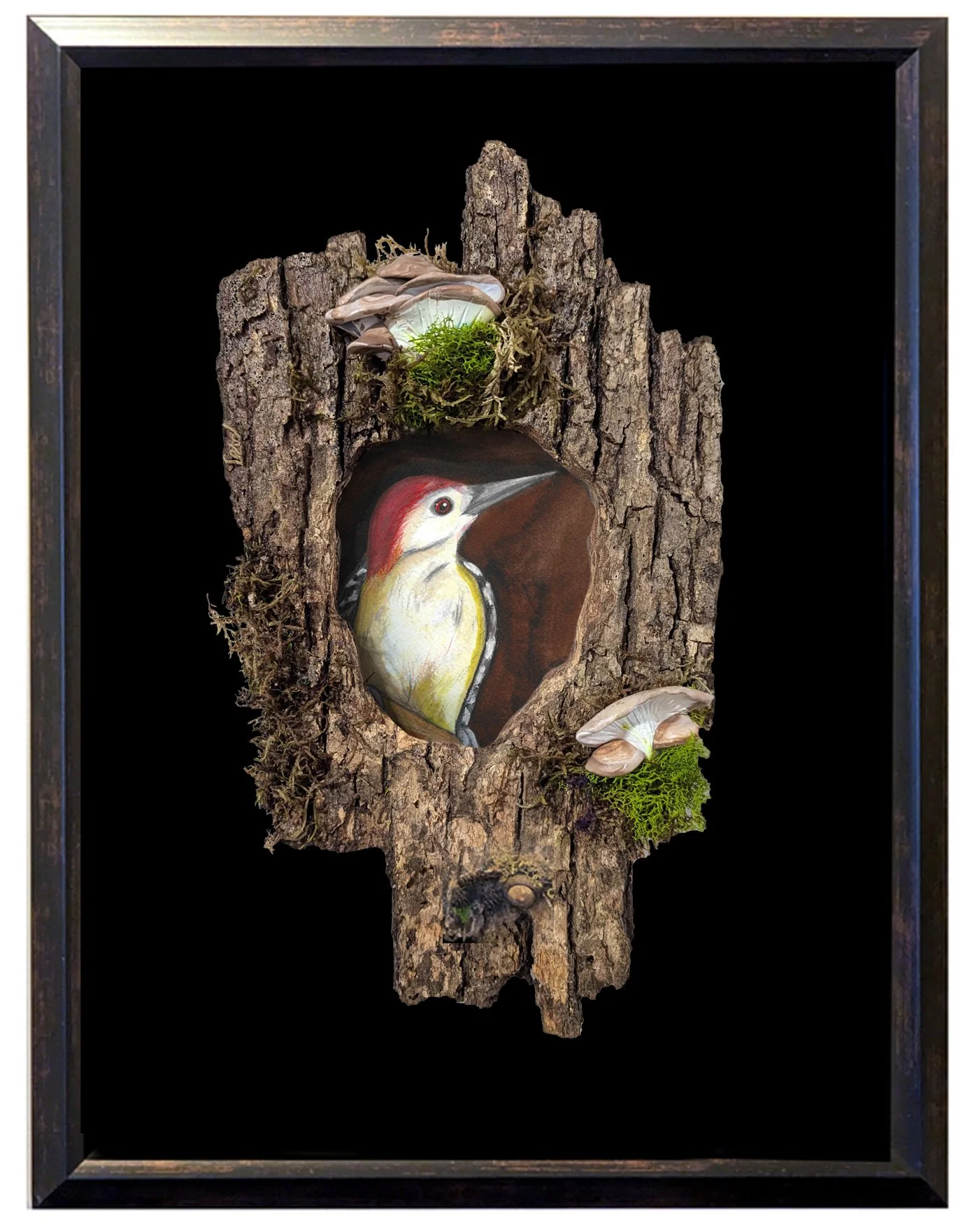
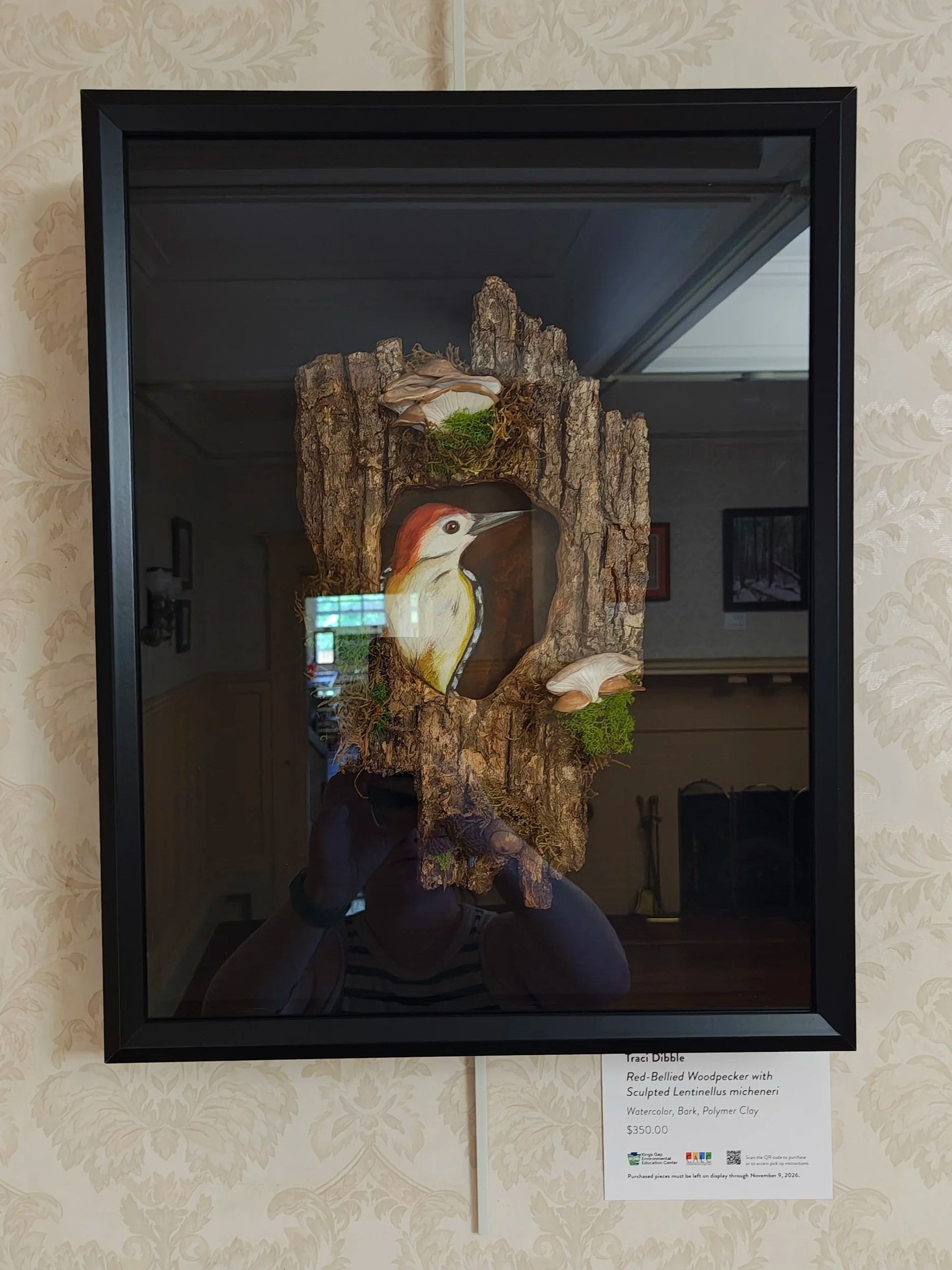
Red-Bellied Woodpecker with Sculpted Lentinellys micheneri
by Traci Dibble
Watercolor, Bark, Polymer Clay
Scroll down for artist statement & bio.
If purchased, this piece must be left on display at the Cameron-Masland Mansion through the end of the exhibit on November 8. CALC staff will pick the work up from the mansion the following week and will contact buyers to arrange pick up of the work from our facility at 38. W. Pomfret Street in Carlisle. Pick-up is preferred, but arrangements can also be made at that time to ship work for a shipping fee. Quotes cannot be provided for shipping until after Nov 8. We will do our best to keep shipping affordable, while getting your purchase to you safely.
If you have any questions, please feel free to contact our Gallery Director, Abria Donato: 717-249-6973, info@carlislearts.org. CALC is closed to the public on Sunday and Monday. You can expect a response by Tuesday.
Artist Statement
My wildlife shadowboxes grew from the same impulse that sends me into Pennsylvania’s forests with binoculars in one hand and a sketchbook in the other: the urge to look closer. I am drawn to overlooked details—the textures of bark, the persistence of moss, and signs of life tucked into small spaces. Each piece began with a fragment of bark shed by the trees in my backyard—one heart-shaped and riddled with holes, the other covered in moss.
Red-Bellied Woodpecker with Sculpted Lentinellus micheneri brings together watercolor, polymer clay, and the forest itself. I carved a cavity into the bark to give the woodpecker a home, then surrounded it with acorns, pinecones, and hand-sculpted fungi. Everything is life-size, because scale matters when you want someone to feel they’ve stumbled upon a secret. These elements suggest a complete ecosystem—producers, consumer, and decomposer.
My hope is that viewers leave with a heightened sense of curiosity and a deeper appreciation for the fragile, intricate systems preserved in places like Pennsylvania’s state parks. If these pieces encourage someone to look more closely—or to step onto a trail with new attention—then they have done their work.